"Wen lambo?"
It's the oldest running joke in crypto — the question typed under every chart since the early Bitcoin forums, aimed at everyone who ever swore their coin was going up: so when's the Lamborghini coming? Fifteen years of comment sections turned it into the most recognizable four syllables in the culture.
The thing about that joke: one person actually answered it. In 2018, the news wrote up a founder who'd bought a $200K Lamborghini with $115 worth of Bitcoin he'd mined in 2011. That founder was Peter Saddington. He's been in since 2011, publicly, with receipts — and he still owns the original answer to crypto's oldest question.
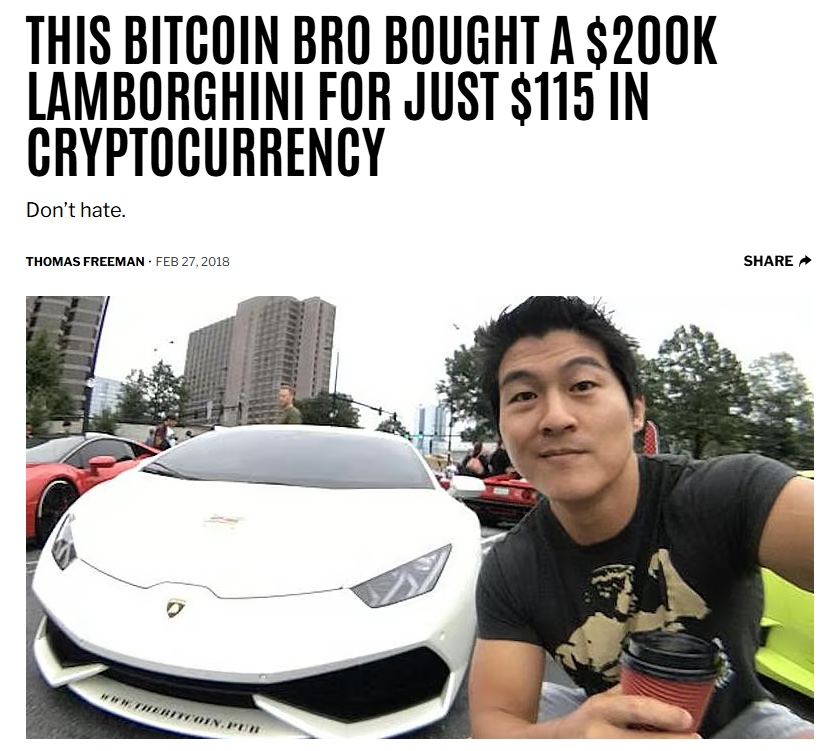
The joke gets a flag.
July 1, 2026 — Robinhood opens its own chain. An Ethereum L2 with 100ms blocks, Uniswap and Chainlink from day one, and tokenized stocks trading around the clock. Within a week the meme era arrives and daily DEX volume jumps nearly 10× in a single day. Into that exact window, a team relaunches crypto's oldest joke as $WEN — and asks the man who owns the original answer to carry the flag.
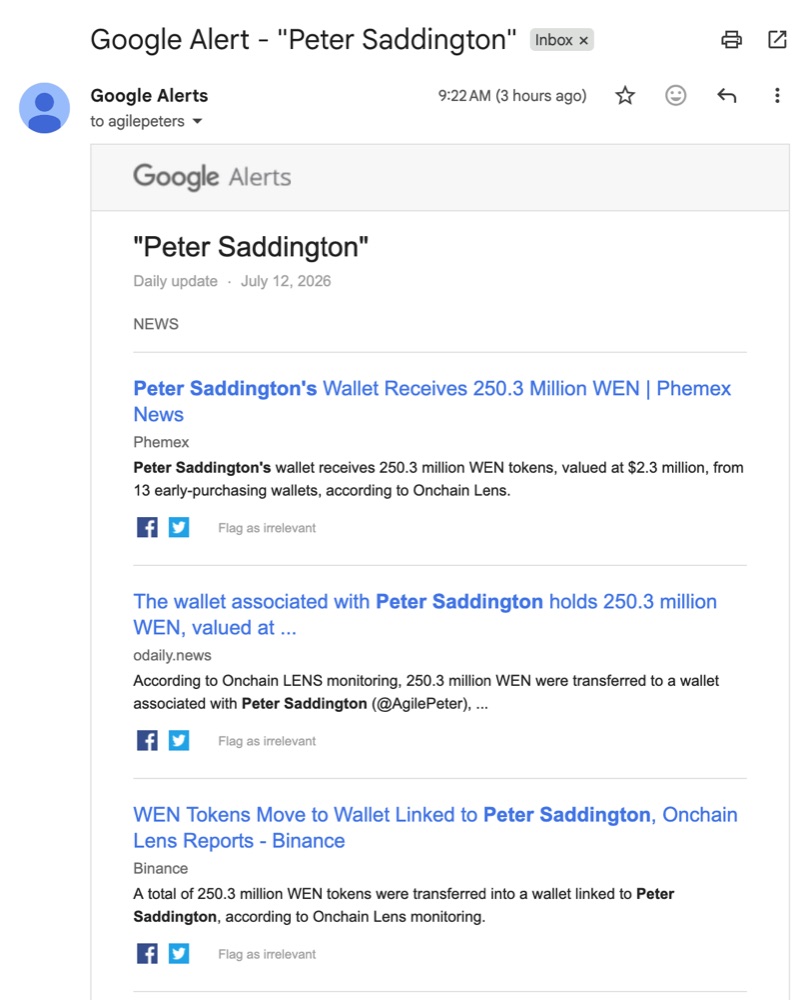
He said yes, in public, the way he does everything: his 250-million-WEN allocation was disclosed on-chain and picked up by the crypto press within hours — Phemex, odaily, Binance's feed. No hidden bags, no quiet exits. The experiment runs in the open, red days included, in a field log the whole internet can read.


trending on Robinhood's own in-app feed — the venue's front page, organically.
by market cap on the whole chain — the youngest token in the top ten.
of the founder's allocation disclosed in public. Transparency is the marketing.
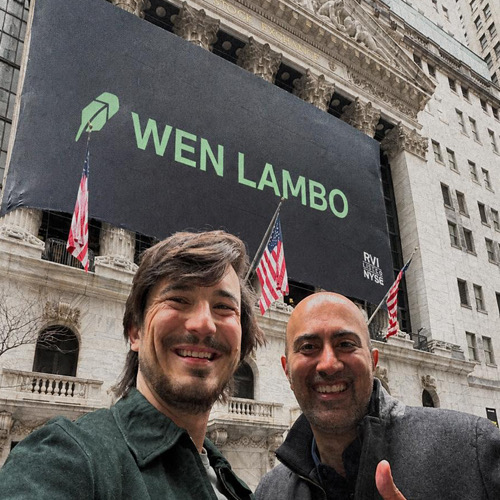

The fastest sport in college is the one nobody funds.
College athletics found its money — the NIL era is a multi-billion-dollar economy — but over 80% of it flows to football and basketball. College racers see almost none of it: most college racing runs as club programs, outside the athletic departments, outside the NIL rails entirely. Students fund six-figure seasons with bake sales and part-time jobs, while global motorsports sponsorship stays gatekept at the top of the pyramid.
the NIL college-athlete economy — weighted overwhelmingly to football & basketball.
global motorsports sponsorship — projected to more than double by 2035, and closed to students.
what a typical college race team sees from either pool. That's the gap $WEN aims at.
The Giving Factory flips the math: $WEN grants go to real race teams — tires, parts, entry fees, whole seasons. Grants are gifts, not contracts — the cars carry the flag because the drivers want them to. The same rail is open to fans: pick a verified team on the grid and back it wallet-to-wallet, no middleman.
Give
Grants in $WEN to real race teams. Gifts, not contracts.
Race
Teams turn grants into tires, parts, and entries. Real cars on real grids.
Fly the flag
Funded cars carry $WEN by choice — gratitude beats any sponsorship clause.
Grow
Racing gets bigger, the community gets louder, the pot refills. Around again.
honest fine print: grants are gifts — nobody is required to promote anything. The loop runs on gratitude and good racing, and whether it works is measured in public, whichever way it lands.
The platform already races.
Robinhood's founder built the chain for three things: real-world assets, real utility, and the memes that move markets. $WEN is the only token on the grid that is all three at once — in a sport Robinhood already backs with its own name: primary sponsor of 23XI Racing across the 2026 NASCAR season, Daytona 500 included. When Vlad Tenev put out the open call for RWA builders, the King answered him directly, on the record — and in July 2026, Vlad followed him back on X. Robinhood's own app has already flashed $WEN at #1 trending on the chain. This isn't a token chasing the platform's vision. It's the vision, running — in the sport the platform already races in.
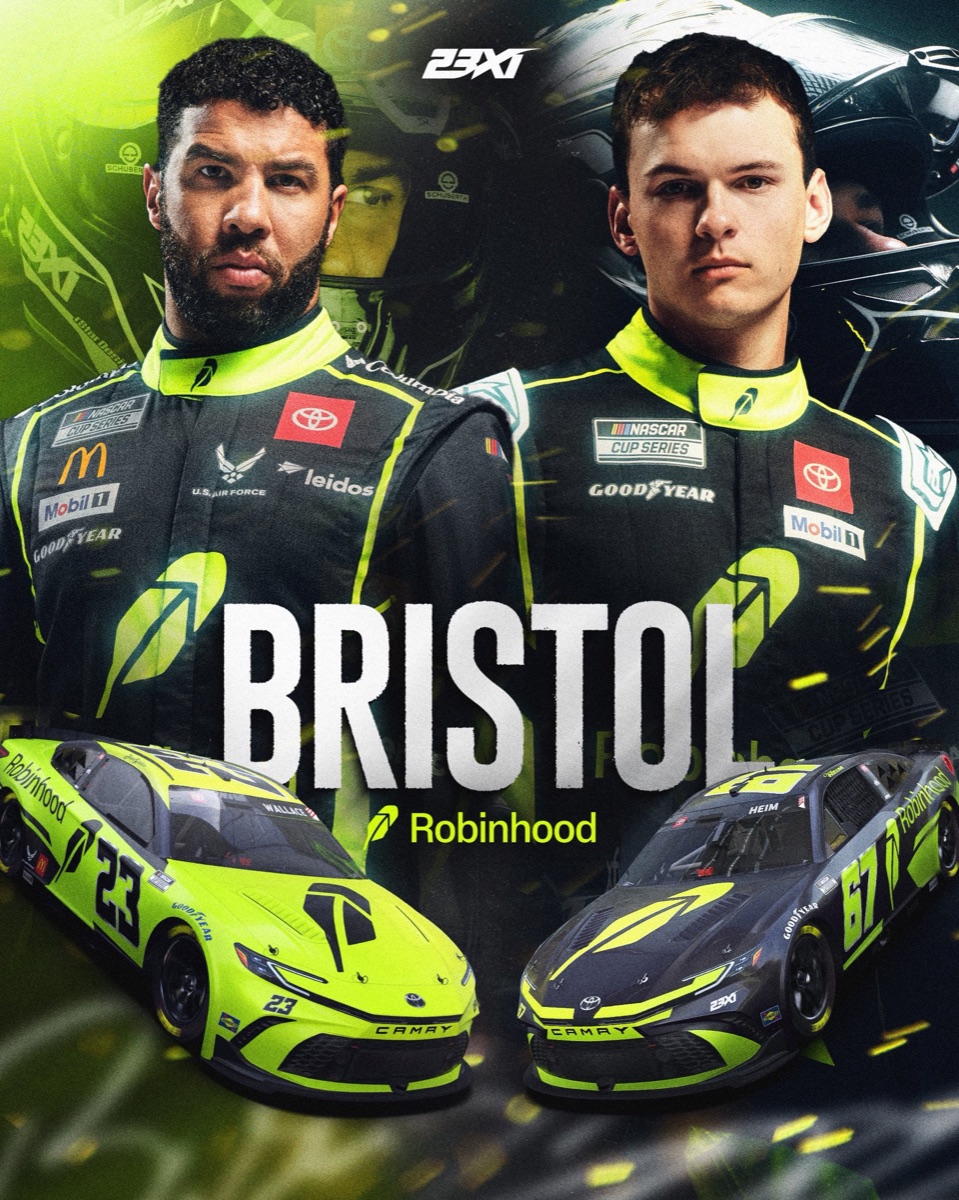
And the bigger frame: motorsports is wall-to-wall real-world assets. Teams, machines, timing rights, provenance — the most tangible asset class in sports, and almost all of it still lives off-chain. Robinhood built its chain to make real-world assets programmable and portable. $WEN is the flag planted in that lane: the meme out front, the mission underneath.
What can't be forked.
Any token on any chain can copy the mechanics. None of them can copy these four things — and all four were true before the token existed.
Fifteen years of cultural weight
"Wen lambo" is crypto's oldest question, anchored by the man who owns the original answer. A new meme can be minted; a decade and a half cannot.
In since 2011, publicly
The most common way memecoins die is abandonment. This founder's entire brand — five exits and fifteen years of receipts — is that he does not leave.
A direct line into real racing
Real teams, real grids, college racing to a championship being built from scratch. Distribution you cannot buy — you'd have to build the sport first.
Logged in public, red days included
Every day of the experiment is documented in a public field log — milestones and drawdowns alike, logged within minutes, up and down. In a category defined by hiding, transparency compounds.
The founder on $WEN and Robinhood Chain — the provenance, the platform, and why the moats hold. In his own words.
Where the Society fits.
The Paddock Society is the membership wing of all of it. Hold any $WEN and you're in — the token is the card. From there, everything is earned by presence: check in at races, bank laps, climb the ladder, back the team you believe in. Nobody can buy their way past someone who shows up.
15 years of provenance
The most recognizable question in crypto — and the man who owns the original answer.
Funds real racing
Grants and fan support flowing to real drivers and teams. The tape is public.
Hold = you're in
The token is the card. Showing up at the track is how you rank.
Racing is RWA country
Teams, machines, timing rights — on the chain built for real-world assets.
$WEN is a high-risk memecoin; nothing here is financial advice · the complete honest fine print lives on the disclosure page.